
watch now
VIDEO
5:46
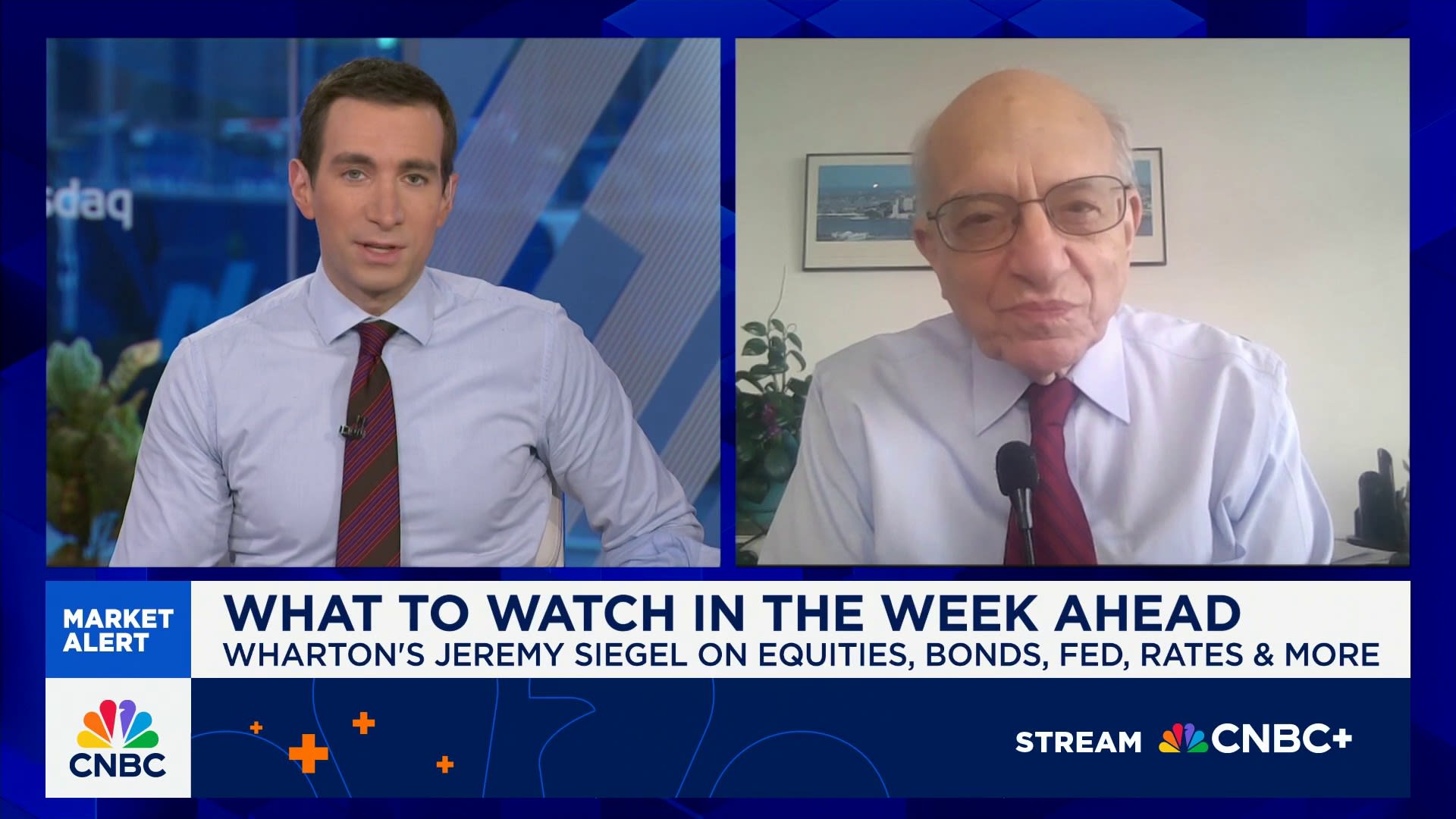
05:46 Count on a ‘hawkish lower’ from the Fed this week, says Wharton’s Jeremy Siegel Squawk Field
The Federal Reserve is predicted to decrease its benchmark charge by 1 / 4 proportion level at its assembly this week.
The transfer would mark the Fed’s third consecutive charge discount this 12 months, following the September and October cuts, bringing the federal funds charge to a spread of three.50%-3.75%.
President Donald Trump has been sharply crucial of Fed Chair Jerome Powell, arguing that charges needs to be considerably decrease. Trump has additionally mentioned he is aware of who he intends to decide on to succeed Powell, with Nationwide Financial Council Director Kevin Hassett thought of to be the front-runner.
If appointed, Hassett would take over a Fed that’s at the moment torn between officers who suppose further charge cuts are warranted and those that are reluctant to ease financial coverage additional.
Learn extra CNBC private finance protection
- Why affordability is the ‘beating coronary heart’ of the ACA enhanced subsidy debate
- VantageScore’s CEO: Common credit score rating is masking indicators of economic misery
- Single-stock ETFs can amplify returns, analyst says, however there’s ‘vital threat’
- Why single-income households are ‘a bygone period,’ in accordance with specialists
- IRS releases HSA growth particulars beneath Trump’s ‘huge stunning invoice’
- What December’s Fed charge lower means to your cash
- Scholar mortgage debtors have ‘a restricted time’ to depart cost pause
- Tax modifications Social Safety beneficiaries might even see based mostly on new legal guidelines
- Uncertainty over ACA subsidies persists as enrollment deadline looms
- 53% of traders with a required withdrawal for 2025 nonetheless have not taken it: Constancy
- Why jewellery house owners could need to test their householders insurance coverage protection
- Many pupil mortgage debtors say it is tougher to cowl fundamental wants: survey
- Nearly all firms with 401(ok)s enable Roth financial savings — who advantages
- 401(ok) modifications for 2026 —one is ‘impactful’ for prime earners, CFP says
- CNBC’s Monetary Advisor 100: Finest monetary advisors, high companies ranked
The federal funds charge, set by the Federal Open Market Committee, is the speed at which banks lend to at least one one other in a single day. Though it is not the speed customers pay, the Fed’s strikes nonetheless affect the charges particular person debtors pay on many varieties of client loans.
That mentioned, for many Individuals, a Fed charge lower doesn’t assure decrease borrowing prices.
A combined bag for customers
“Anybody who’s uncovered to variable charge debt, which is benchmarked off of prime, may see a discount of their borrowing prices — however for the mortgage market and another longer-term charges, we may even see a rise,” mentioned Brett Home, economics professor at Columbia Enterprise College. “It is dependent upon the period of the product and the product itself.”
Quick-term charges are extra intently pegged to the prime charge, which is the speed that banks cost their most creditworthy prospects — usually 3 proportion factors above the federal funds charge. Longer-term charges are additionally influenced by inflation and different financial elements.
Mr Vito | E+ | Getty Pictures
Since most bank cards have a short-term, variable charge, there is a direct connection to the Fed’s benchmark.
When the Fed lowers charges, the prime charge comes down, too, and the rate of interest in your bank card debt is more likely to regulate inside a billing cycle or two. Nonetheless, bank card APRs will solely ease off extraordinarily excessive ranges.
“To go from 20% to 18%, that does not change your state of affairs,” mentioned Stephen Kates, a monetary analyst at Bankrate. “It would not put you able the place that stability is meaningfully simpler to handle.”
Auto mortgage charges and federal pupil loans are fastened for the lifetime of the mortgage and will not regulate with the Fed’s transfer, though anybody searching for a automobile or taking up training debt within the 12 months forward may benefit if borrowing prices come down on new loans.
Longer-term loans, like mortgages, make up the most important share of client debt, however these loans are even much less impacted by the central financial institution. Each 15- and 30-year mortgage charges are extra intently tied to Treasury yields and the economic system.
watch now
VIDEO
3:24
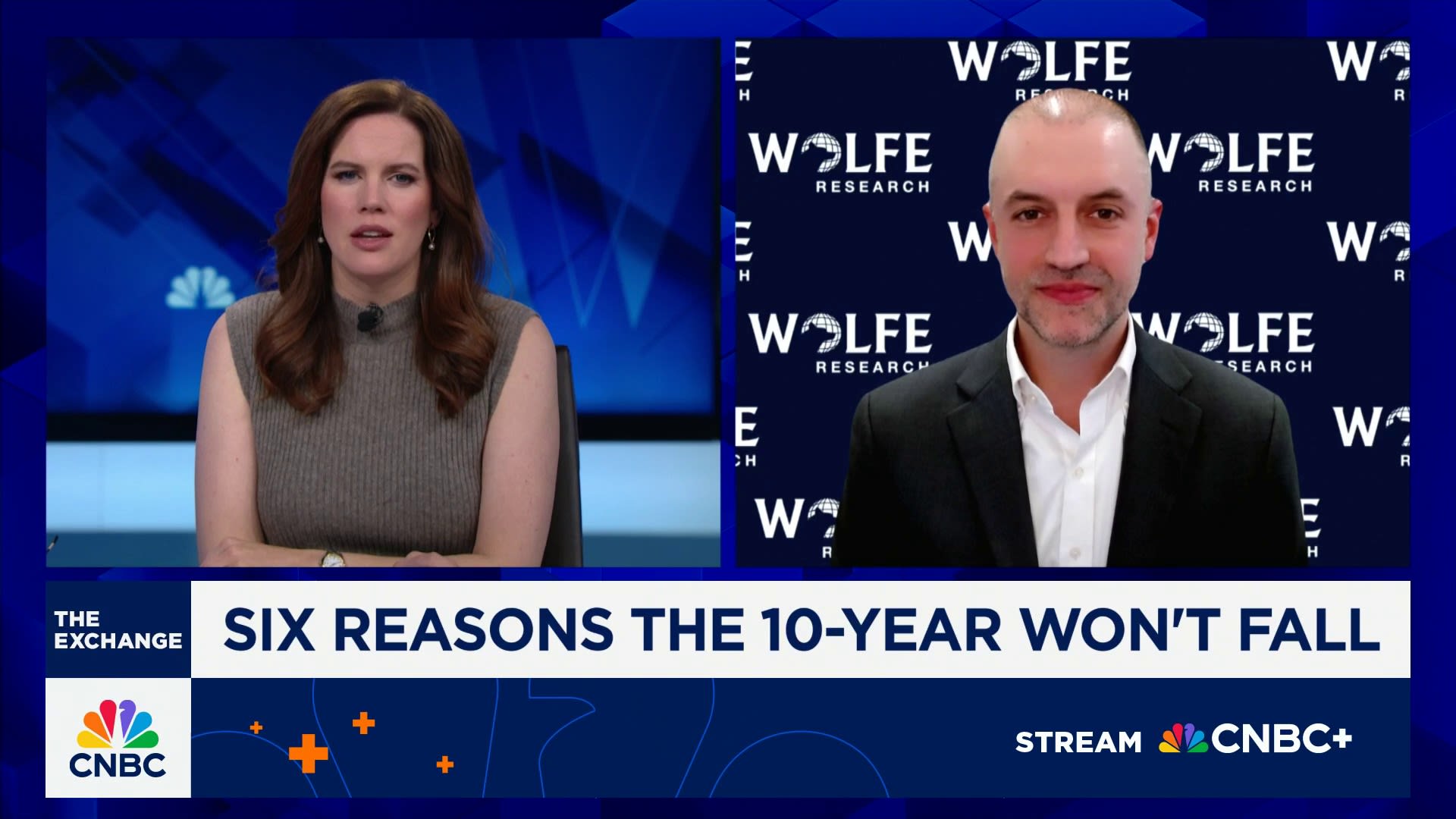
03:24 U.S. 10-year yield will not head durably down if Hassett turns into Fed chair, says Wolfe’s Tobin Marcus The Trade
“The bond market would not imagine that inflation is conquered,” mentioned Professor Home, noting that lack of religion has saved mortgage charges in the identical slender vary.
Additionally, since most individuals have fixed-rate mortgages, their charge will not change except they refinance or promote their present dwelling and purchase one other property.
Different dwelling loans are extra influenced by the Fed’s strikes. Adjustable-rate mortgages, or ARMs, and dwelling fairness traces of credit score, or HELOCs, are pegged to the prime charge. Most ARMs regulate yearly, however a HELOC adjusts immediately.
For Individuals who’re ready on some aid from excessive borrowing prices, rising your credit score rating is a simpler strategy to safe most popular charges on bank cards, auto loans, private loans and even mortgages, in accordance with Bankrate’s Kates.
“The easiest way to enhance your borrowing prices is to enhance your credit score rating and never have to fret about what the Fed is doing,” he mentioned.
Subscribe to CNBC on YouTube.